Thursday, April 21, 2011

Justified Season 2 Review


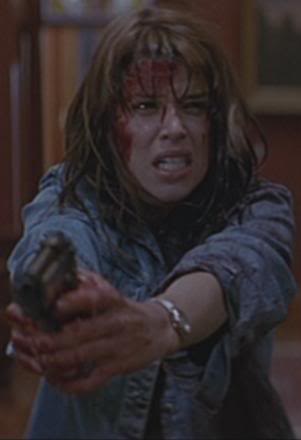
"Homicide is justifiable when committed by public officers...when necessarily committed in overcoming actual resistance to the execution of some legal process, or in the discharge of any other legal duty." That part really leaves some appropriate wiggle room, and is damned convenient for good storytelling.


I clearly remember being excited last year for the premiere of Justified. The marketing campaign, focused on Timothy Olyphant's old-school-lawman character Raylan Givens, was fantastic and I definitely tuned into the pilot. I remember liking it too, but for some reason I didn't stick with the show. Could be life just can't fit all the television one wants to watch, could be certain aspects of the show itself were either slow or daunting. Regardless, it was a year later that I fell victim again to their truly effective marketing and watched the 2nd season premiere. And then, again, I didn't stick with it. This time, however, it lingered in my head, and after missing a few, I told my DVR to record 'em all and waited for a day to come when the mood was right.

Last night I got caught up. It's a good show. A really good show. Better than most of the stuff on TV. The thing about Justified is, one becomes acutely aware that the premise is basically just the main character. Without Olyphant, the show would be completely boring and the portrayal of Kentucky Hill-folk as wild west rednecks would be damn near unwatchable.


Olyphant is why it works, and works so well. He is ridiculously charming and constantly pitch-perfect. Any scene that doesn't include him, or someone we're convinced he cares about (ex-wife Winona, boss, partner) feels about 20 minutes longer than it really is. That could also be because any scene he's not in focuses on one of the criminal characters working on their machinations to 'run this town' via bleak, cruel, belligerent and despicable means.

The character of Boyd Crowder, who was apparently written for the pilot and perhaps a couple more episodes but then got extended into a main cast member, is Givens' main recurring antagonist, alongside whichever Big Bad is also in the picture this season. Lifelong friends who went very separate ways, Boyd himself, as well as their civil, violent, oscillating friendship, is a running metaphor for the thin line between good and evil, and the common difficulty of distinguishing the two. As such it is certainly ambitious, and brings some more meaning to the situation than a mere shootout would, plus it is always well written, but it remains often a little heavy-handed.

One problem for me is the writers' apparent intention for the audience to sympathize with Boyd. Between his criminal activities we see him sporadically having Raylan's back, speaking like a priest, and somehow getting a sweet, young, beautiful blond woman (his dead brother's widow) to fall in love with him. But then he shoots some people and takes off his shirt, showing a giant swastika on his left arm, and no matter how much authenticity of the local Kentucky culture the show has established (about 50% of which I instinctively don't believe) there's no coming back from that for me, and I'm merely waiting for him, like all the villains in the show, to get a bullet between the eyes courtesy of our favorite US Marshall.

Givens himself straddles the line of right and wrong, legal and, well, anything but. Refreshingly, when it comes to himself at least, this does not result in a profound, philosophical questioning, a reflection on one's conscience and the morally gray world we live in. Instead, Givens knows he's a good man, he knows how to spot a bad man, and he knows how to fire a gun so well that the latter neither sees it coming nor gets up after. Even when he is compelled to do something illegal on behalf of Winona, the ex-wife whom he's kind of dating, he doesn't spend much time troubling himself over his motivations, and merely comes to the conclusion that he's in love with her and therefore justified in doing anything he has to in order to protect her.


Winona as a character is a little difficult to like. She shifts between strength and spunk to emotional vulnerability and the need to be saved. The main reason one enjoys her, and looks forward to her screen time, is that Raylan loves her (therefore she must have merit) and when she's on the screen, he's usually with her.

The pace of the show is a bit erratic, though it seems to be improving. The brief pre-credits opener is always solid and captures the tone of the show perfectly, but later it gets a little plodding, as if it can't decide between formats. Sometimes a procedural, sometimes a mystery, sometimes a taught-with-tension thriller, and sometimes a meandering exploration of a character's past and the lives of honest, drug dealing, flannel-wearing gangsters. Invariably, for the last 15 minutes of the show, we are given a more consistently exciting climax, featuring gun-battles, fist-fights, or resolutions found by Raylan simply threatening gun-battles and fist-fights.


So while almost all the characters pale in comparison to the main one, though with some exceptions and overall solid acting, Olyphant gives us more than enough to keep watching. He is a funnier Eastwood, a softer Constantine, a laid back Marlowe. He is the reason I'm gonna watch the last couple episodes of the season, and I recommend you give him a chance as well.


Wednesday, April 20, 2011

R.I.P. Elisabeth Sladen


Elisabeth Sladen, the actress who played Sarah Jane Smith in numerous Doctor Who episodes, and later in her own spinoff, has died. She was only 63 years old and some news outlets report that she had been struggling with cancer.


Sladen was a joyful actor and a legendary part of the Doctor Who universe. She was the main companion of the Third and Fourth Doctor in the 70s, John Pertwee and Tom Baker, respectively. She returned to the show several times, reprising her role as Sarah Jane Smith, including a fantastic episode "School Reunion" in the 2nd series of the reboot with David Tennant.

"School Reunion" is a personal favorite of mine. I have never seen the old Doctor Who episodes, never grew up with them, but I have been a huge fan of the reboot, and this episode ties together the past, in the form of Sarah Jane Smith, and the present, mostly in Rose Tyler, the current companion.

Tennant is silly and serious as always, investigating a remarkable upswing in test scores in a children's school by posing as a teacher, while Rose pretends to be a cafeteria lady. Sarah Jane Smith, who hasn't seen the Doctor in many years and has built herself a life as an investigative journalist, using her specialized expertise to track down strange phenomena, also noticed the story and came to find out the truth. There is a wonderfully creepy scene when she discovers the TARDIS while sneaking around the school at night, and her meeting with the Doctor is appropriately fraught with love and nostalgia and anger.

Her rapport with Rose Tyler (Billie Piper) was wonderful as well, after beginning as mere jealousy and then bonding over shared experience and Doctor-teasing. Even Mickey, Rose's friend, finally becomes likable, K-9 shows up, and the villain turns out to be the alien-bat-shapeshifting-principal Anthony Stewart Head. That's right, Giles in Doctor Who! This one had it all.


Sladen was so good in fact, that she got her own spin-off, The Sarah Jane Adventures. It was a children's show, mostly, but a lot of the same writers worked on it, and it was well-paced with interesting aliens and solid stories. It followed Sarah Jane's investigations, starting off with one where she rescues a young teenage boy that a group of aliens had created to be a perfect human being. After foiling their nefarious plans she adopts him, and with his new friends (couple local kids) they team up to save the universe on a regular occasion.


The show had been on for 3 series, and I had no doubt it would continue. Sladen guest starred on Doctor Who during this time as well, returning for some very climactic season finales and getting good screen time.


She made an indelible impression on this universe, one where every episode sees new, famous faces, and every incarnation of the Doctor has its own companions. But she knew the Doctor in at least 4 different bodies, was loved and respected by him, was fearless and forged her own way when that life ended. Sladen brought compassion, humor, and a steel-iron will to the modern resuscitation of the character, and bridged the history gap for many of us newer fans.


She will be missed.


Tuesday, April 19, 2011

Link Me To The Moon, Captain


Still preoccupied with digesting/recovering from last night's Seder. In the meantime, enjoy these links. And let me know if there's anything you particularly want to see here at Superpowers That Be.


-Comic Book Resources provides one of the many positive reviews being written about the Thor movie.

-Bleeding Cool has a new poster for X-Men: First Class.

-Comic Twart's old but stunning Silver Sable gallery, a personal favorite of mine. Lovely site.

-NY Times has a new interview with Joss Whedon. Mostly Doc Horrible related, but with some Firefly reminiscences and Avengers jokes.

-BigHollywood has a negative review of the new "absurdist horror" film Rubber, about a self-possessed tire rolling around killing people.

-Bloody Disgusting elaborates on deleted scenes from Scream 4 (that I noted in my review) as well as alternate endings/beginnings, and then goes on to give us some pictures of the upcoming Fright Night remake, written by Marti Noxon of Buffy fame and starring retired Doctor David Tennant.

-ComicVine has some pictures of the upcoming and much discussed Batman Live theater performance. Not something I can get behind, but I appreciate the Robin-centric storyline.


Currently excited for: New Doctor Who series starting Saturday!! Comic by Comic gives us a trailer.

Currently reading: The Language of Bees by Laurie R. King. If you're a Sherlock fan go find this series. Beautiful, thrilling, funny, and scholarly, I cannot stop devouring them. Almost up to date and already looking forward to upcoming The Pirate King (best title ever.)

Happy Passover.


Monday, April 18, 2011

This Week's Comics

A list of what I'll be buying on Wednesday, April 20th, 2011.

DC

Batman #709: I'm not the biggest Tony Daniel fan, but this issue is written instead by David Hine, and being the end of a mini-crossover in which insane evangelical Christian Knights terrorize Gotham in pursuit of a "worthy" superhero it necessarily includes an appearance by Red Robin. Anything with Tim Drake in it I'll buy, though it's hard to pass over any title with Batman in it as well.


Green Lantern #65 & Green Lantern Corps #59: I honestly don't know why I keep buying these. I don't like the recent War of the Green Lanterns storyline, nor have I particularly enjoyed any post-Blackest Night issues. But I have a soft spot for Kyle Rayner. Also for Mogo, though he hasn't been seen in awhile.

Power Girl #23: This is not a certain purchase, but I picked it up for the first time last month and was very pleasantly surprised. Never knew much about the character, but the comic seems to be very humorous and well written. Plus she's fighting magic dinosaurs with Superman and has to call Zatanna for help. Pretty fun stuff.


Teen Titans #94: Not crazy about this new character Solstice, and generally dislike when the Titans face demons/spirit stuff/other realms, etc. Still the title has been slightly revitalized by J.T. Krul, and has a perfect roster. Glad to have Red Robin back, but not sure why they had Damian for such a short time. He was a big part of why the first few issues worked somewhat.


IMAGE

Invincible #79: A bit perplexed why I keep buying this one as well. Cause I like Atom Eve? Pretty sure I don't actually like it, but it's certainly pretty (when not ridiculously gory) and perhaps fallout of Viltrumite War will be interesting, specifically Mark's parents reuniting.


MARVEL

Avengers #12:  Recent issues have not been reviewed well, but I'm a big fan of this run by Bendis. I loved the Infinity Gauntlets of old, love the art, love all the characters. Besides, Thanos shows up! Not sure how or even if Bendis is going to explain what he's doing here and not dead in the collapse of the Cancerverse when Nova and Star-Lord (two of Marvel's best characters ever) sacrificed themselves to keep him there. Hoping for their resurrection as well.


Avengers Academy #12: Great comic. Love how it's steeped in Avengers history, with Korvac and Carina making interesting returns. The kids are transported into their grown-up bodies, pulled from the future chock full of experience and power! Rich potential for emotion (frustration, excitement, humor) and good fight scenes.

Generation Hope #6: Enjoying this one a lot. Gillen's been doing some good stuff with his early X-run, especially when it comes to Hope and her Five Lights. This is supposed to be kind of a biggie, with a new Light appearing, and one of the Five's fate in question. Mostly I'm just waiting for some Phoenix exposition, but worth reading regardless.

Sigil #2: Never read CrossGen way back when, but picked up the first issue of this because I'm a Mike Carey fan and the premise looked cool (slightly Buffyesque.) It was very solid and, being only a 4-issue mini, I'm definitely seeing this through. Pirates! Magic! Girl power! (Mark Waid's Sherlock-esque CrossGen reboot is also fantastic.)


Uncanny X-Force #8: This comic is definitely ambitious, but it's wearing me out a bit. The convoluted plots and intense Fantomex expositions tend to take me out of the flow. Still, Psylocke's in it, and Remender even makes Deadpool an interesting, unexpectedly deep character. Very curious about Betsy's rematch with the Shadow King, as well as the future cover showing her kissing Fantomex. Less curious about Archangel's inevitable, if brief, switch to villainy.

Wolverine and Jubilee #4: Critically acclaimed, but not at all a favorite for me. Keep buying it just cause I used to love this pairing back in the day, when they took on Sentinels together and  Jubes' PAF!s got all powerful. Hate her as a vamp though, but hopefully this clears up her future existence in the Marvel U.

X-Factor #218: One of the most consistently awesome comics out there. Loved David's original run in the '90s, loving it now. Guido shot! Monet rampaging! Rictor and Shatterstar still gay and together! Layla Miller all growed up! What more could a fanboy ask for?


Check out some Marvel previews for this week at CBR.

Sunday, April 17, 2011

Review of AMC's The Killing Premiere


AMC's new original series The Killing began two weeks ago, so I'm slightly behind not only in reviewing the 2-hour premiere, but in watching it at all. From the ad campaign I knew it was one of those shows for which I'd have to be in the right mood to embark upon. Seeing Scream 4 on Friday incited a desire to watch something that considers its audience slightly intelligent and endeavors to evoke some emotion without base manipulation.

Thus my mind began to drift towards more potentially rewarding horror experiences, or thrillers or mysteries, the idea being that if I felt strong enough (not always the case, for instance I've never been able to even try Breaking Bad) I might as well take the plunge. One can always find a repeat of Gilmore Girls to wash out the lingerings of a grim story. So, unable to sleep, and having found and re-watched a late night airing of Se7en, I found The Killing on my DVR list where it had been patiently waiting for the right time.


The show has a surprisingly gentle, methodical pace, akin to well crafted mysteries like the Prime Suspect series. The production is more comparable to a feature film than to the usual one-hour procedural littering the television landscape. For instance the body of Rosie Larsen, whose murder will form the arc of the initial season, is not found until the end of the pilot, and halfway through the premiere event. I was not surprised by the discovery, not only from seeing the marketing campaign beforehand or having a basic idea of the premise, but because the bleak tone of the writing and cinematography allowed no suspicion otherwise.

This tone is constant throughout, the setting of Seattle playing a huge part by providing rain, darkness and the manifestation of a somber, strangely beautiful, nearly hopeless world. (One can clearly feel the Scandinavian original's influence, a la Wallander.)


"Something's not right."
The main character, and clearly the heart of the story, is Detective Sarah Linden, played by Mireille Enos. Often she feels a bit nebulous, particularly when it comes to facial expressions that range from slightly pained to clairvoyant, and they certainly did a few too many dramatic close-ups of her to illustrate her keen hunches and intuitions of doom. Nonetheless she has a quiet intensity not to be ignored, and a focus and intelligence that has your affection and respect by the end. (Competence is always a pleasing characteristic in crime dramas--think Frances McDormand in Fargo.)

Her replacement slash partner, Stephen Holder (actor Joel Kinnaman) is a different story. He is incredibly off-putting and only slightly original. An ex-undercover cop, he is clearly a bit addled by excessive drug use and out of touch with Procedure, compassion, and basic human civility. He begins by being unnecessarily crude when questioning people, standing far too close for comfort and generally creeping people out. This behavior continues until a very awkward scene where he gets some information from two young high school girls by getting them high (he's been loitering by the soccer field, looking mysterious and smoking a joint) and flirting with them by being both explicit and sleazy as hell.


However this bizarre tactic, awkward as it is to witness, proves his persistence, his own ability to sense where a lead may be, and his first personal contribution to the case, by uncovering a twisted crime scene in the basement of the high school.

Perhaps it was merely the fact that I watched Se7en (again) before viewing The Killing, but there are a few similarities that come up. Certainly the coloring of the scenes and the tone, that of a hostile world with little hope, is familiar, but mostly the personalities of the lead detectives. One is calculated, cautious, experienced, emotionally controlled, observant and intelligent. After many successful, respected years on the force, she is quitting to build a new life far away and devoid of homicide. (One half expects her to quote Freeman's famous line: "Ernest Hemingway once wrote, 'The world is a fine place, and worth fighting for.' I agree with the second part.")


The other, younger cop is cocky, impatient, ambitious, and possessing a more limited, slightly unrelated skill set, though he has a promising albeit different intelligence as well. Invariably a connection will grow, mutual admiration and affection will blossom, and their abilities will begin to complement each other. Again, not terribly unique, but well done so far, and if you're going to borrow from Se7en for your murder mystery drama, at least it shows good taste.

The story also follows the family of Rosie Larsen from their happy normalcy through the anxiety of the search for their missing daughter and ultimately the intense grieving process when their worst fears are confirmed. The acting of the entire family (parents, aunt, younger brothers) is certainly effective, but in the end we are shown maybe ten minutes too many of their sorrow, clipping the tenuous and deliberate momentum unnecessarily.


Michelle Forbes as the mother, Mitch Larsen, is particularly good, which brings me to point out an always promising (except for Dollhouse) Battlestar Galactica connection, both her and Det. Linden's fiance, played by Callum Keith Rennie, being BSG alumni. (Admiral Cain and Leoben, respectively.)

"Vote for me. I am a hero of the 4400."
The other main storyline focuses on City Councilman Darren Richmond, played by perennial guest/co-star Billy Campbell, as he runs for mayor. This part of the show feels more forced than any other, as well as derivative. (Political campaigns are morally gray and handsome politicians can be mysterious and suspicious? I've never heard of such a thing.) It feels like an attempt at mirroring the intricacies of high school that Rosie Larsen was enmeshed in by displaying the infighting, conniving and manipulation of an election.


In the end, the points they are trying to make are too simple: Life is complicated. Relationships are invariably messy and dangerous at any age. Even happy relationships (the Larsens) will be shaken if not destroyed by tragedy.

Like most cop shows it tells us that people are cruel, twisted, secretive and often conscienceless. People are bad and thus we need the police as a force of good to catch wrongdoers (though rarely to prevent the wrongdoing), pursuers of justice who are interestingly human, and therefore as jaded and vulnerable in their own way as the criminals and victims they are surrounded by.

The Killing is not groundbreaking stuff. There are no innovations, no flashes of heretofore unseen brilliance, no unexpected paradigm shifts. But change is often overrated. This is a solid, well-made genre piece, perfect for mystery fans, and I recommend it.


Saturday, April 16, 2011

Scream 4: A Review


*Mild Spoilers, but no hugely relevant plot details or hidden identities revealed.*


Scream was a big pop/culture love in my life. Hell, for a year or two it nearly rivaled Buffy for the magnitude of my affection (obsession).

The original was a classic. I came home from middle school to find my brother had rented it, and that was the end. Suddenly I was a horror fan. From the purely terrifying, heartbreaking opening scene to the satisfying end, I was hooked. My profound love for strong women, for girls who fight back, who find a way to act despite the onslaught of grief, fear, doubt and knife-wielding psychos, was forever cemented.


When Scream 2 came out, I could hardly be more excited. A continuation of a story I completely loved? That's almost as good as making it a serial television show that, with luck, would never end. Despite the caveats of sequels, the drop in quality, Scream 2 was a very strong movie, with good Sidney action, legitimate scares, and the very double edged sword of a scene featuring Sarah Michelle Gellar. Seeing her on the big screen was surreal, as if Hollywood producers had decided to sit in my teenage brain and connect my disparate loves (obsessions). Then again watching her fall victim to Ghostface without employing any Buffy moves, in very helpless, vulnerable, panicked acting, was more painful than if Sidney got killed, which I knew wouldn't happen (one of the best principles of the entire series).

Scream 3 wasn't very good. Worth it to watch Sidney again, no doubt, but the story was poor, the scares thin, Parker Posey over the top, Patrick Dempsey out of place, and Courtney Cox's bangs were frightful. Thus a distance was put between me and the passion I used to feel, though it did not take away from the original movie's power. And, I venture to say, nothing will.

So it was that when Scream 4 was announced, I found a tremor in my twentysomething chest akin to the 13 year-old's glee. Ten years later, and it was coming back. The trinity of Sidney, Gale, and Dewey were returning. Craven directing, and Kevin Williamson back on the script. From all the interviews I could find, it seemed as if they weren't making another sequel, but an attempt at a reboot, a back-to-the-beginning resuscitation. I harbored great hopes, eagerly devouring leaked photos and the eventual trailers. So much so that I eagerly went to see it on opening night with a true fan's unwillingness to let the story exist in the public without being a part of it. Which was my first mistake.


Between movie channels, DVDs, the Internet, and NYC ticket prices (not to mention bed bug stories) I had not actually physically been to a movie theater in about two years. Likely it will be another two years before I try it again. The crowd was horrible. Their idiocy and volume started during the trailers and, despite what I told myself, did not abate when the movie began, instead growing to riotous mirth and remaining undiluted throughout. They shrieked, laughed, offered their advice and criticism, grumbled, and almost perfectly reenacted the opening scene of Scream 2, where the hooligans at the opening night of Stab 2 (the movie-within-the-movie of Sidney Prescott's life) are too crazed to notice Jada Pinkett-Smith's murder right in front of them. The comparison of which fit perfectly, since in the end it turns out Scream 4 was not a Scream movie, nor even an attempt at getting back to what made the original so fantastic, but an earnest representation of what Stab 7 would be, a commentary on the increasing ridiculousness of slasher sequels.


They threw themselves into a humorous and self-referential pastiche (not even satire) of the few true originalities the Scream franchise once possessed. In doing so, what they made was a comedy film, as even the completely stoned (or severely stupid) guy sitting next to me could incisively point out to his intellectually matched girlfriend. No attempt at gravity was made. No scares were effective. No danger felt real.

"Ghostface is such a douche. Oh man, he's standing right behind me isn't he?"


The much anticipated, notorious opening sequence set the entire tone of the movie, being purely comedic with some stabbings thrown in as an afterthought to end the scene. Littered with attempts at wit, only occasionally did the dialogue work on any level, the references quickly becoming tired and mood-destroying (though to be fair there were at least twenty lines I couldn't hear since after every punchline or minor surprise the crowd was forced to sonorously reveal their approval or displeasure).

Several characters were complete throwaways (why cast Mary McDonnell, an actress with real chops, for two scenes of no merit? And who needs a comedic relief Deputy when the entire movie is filled with jokes and silliness?) and not even a single murder was even slightly original. So many scenes, plot twists, and even murders were taken directly from the original that it stopped being 'meta' and became embarrassing.


The reveal of the killers (yes there were two, another Scream staple, sorry) was also disappointing. One had been obvious, the other had crossed my mind but been pushed away as far too ridiculous. Their speeches of justification were the worst written parts of the movie, and acted out with equal skill. If there was any hope of salvage remaining, the climax reduced everything to a farce.


There were, however, a few high points. I am fair-minded enough to admit that. Neve Campbell was pitch-perfect as Sidney throughout the whole movie, slipping into her old character with ease and dignity. By far the best scene in the film was her first encounter with Ghostface when, after bursting out of nowhere the killer cuts her cousin's arm, Sidney saves her and launches after Ghostface. Perhaps only 30 seconds in length, the fight scene restored an all too brief snatch of the whooping adrenaline that was the high point for me in all the Scream movies, when Sidney not only adeptly defends herself, but takes the fight to the killer, receiving believable strikes and giving better than she gets, before, after kicking ass and effectively ending the movie, Ghostface does his disappearing act and the plot continues.


Other notable mentions include Alison Brie of Community fame convincingly portraying Sidney's cutthroat and foul-mouthed publicist, and putting in a decent scary scene, and Hayden Panettiere as the spunky kid of the new generation being a character one actually could care about were she given better lines. Courtney Cox also effectively portrayed the Gale Weathers of old, though not present as often as a fan would like, while Dewey, familiar, bumbling, vulnerable Dewey, might as well have not been in the movie at all. Some promising scenes teased at in the trailers were not even in the final cut at all, begging the question of who edited the two-hour fiasco.


All in all, my disappointment is profound. I am fairly certain they will make at least two more installments, though aside from ticket sales I can't see the point. This was not a Scream movie, despite familiar characters, and above all not a horror flick. Perhaps, in truth, the main judgment I should take from the experience is this: Never go to a "scary movie" on opening night, unless you have zero emotional connection to the story and simply view it as a social engagement with your twenty best friends. I have no doubt that my opinions will at least slightly alter when, after an appropriate number of months, I view the film again, alone and in silence, the reprobate crowd having tarnished the event for me in as yet unquantifiable degrees.

Ultimately, this is a movie that many people will clearly enjoy in the name of entertainment, but a true fan of the franchise will find little to be satisfied with.


Friday, April 15, 2011

Panic in the Streets: Fear Itself #1 Review


When FDR (no, it was not Porky the Pig) spoke his famous quote that the "only thing we have to fear is fear itself" he went on to describe said fear as "nameless, unreasoning, unjustified terror." That is to say, panic. Or maybe more along the lines of a phobia, since panic can often be justified, even if rarely a good way to handle things.


In his speech FDR was referring to the Great Depression, and the destitute, poverty-stricken lives of so many American citizens. Apparently, their fear was palpable and "unreasoning" to him, and he decided to comfort them by expanding Government in greater percentages than ever, attempting to sweep down and take the common man under his wing, altering the infrastructure and practices of the United States forever.


In Marvel's latest Earth-shattering multi-layered Superhero event Fear Itself, Matt Fraction has a similar take on the pulse of America. According to Fraction a lot of us are honest folk who live honest lives and have had their houses taken away from us, and there ain't no superheroes nearby who don't give no nevermind to our petty problems.


Then there's another of group of Americans who live in New York and protest the construction of a mosque at Ground Zero, who aren't content with peacefully debating the issue and instead, scared, angry, ignorant, decide to riot in Lower Manhattan and throw bricks at Captain America's head, knocking him to the ground and bloodying up his skull.


It's a shame he opened the series with that scene, cause believe me, I am a sucker for "event comics". Secret Invasion? Shadowland? X-cutioner's Song? I buy every issue, every tie-in with a remotely interesting character, and I buy them all even if I don't particularly like it. Unfortunately, I'll probably keep buying Fear Itself, but I won't take any enjoyment in Fraction's preachy, melodramatic, brainwashed epic.


Admittedly, Asgardian lore and even Thor stories have never been my favorite part of the Marvel Universe, except unless the X-Men were in Asgard, or Storm had been imbued with the Power of Thor. Generally I only read the God of Thunder in Avengers stories, and the same really goes for Iron Man and Captain America. The Big 3 of the Marvel U and I find them less relatable and more stodgy than any other main character. Among them, Captain America was my favorite, but in recent years the attempts to dramatically "modernize" his character hasn't sat well.


As usual in today's world, when attempting to change, improve or modernize something, the actual process that occurs is destruction. The ripping away of what has come before and rebuilding it in our own image, so long as that image is new. Thus was Captain America shot in the head while handcuffed. Thus was he resurrected, grimmer and with purpose, putting away the Red, White and Blue in favor of Black, and totin' guns. Thus did his replacement come to view the immediate and legitimate threat of "tea baggers" en masse, and set out to stop their rise of violence.


Fear Itself has been promoted as an insightful reflection into and representation of the state of present society, as if that is something crucial that comics are meant to do for us. Where did this phenomenon come from? Since when, with the onslaught of TV news, online news, print news, radio, and opinion pieces, do I need the Avengers to tell me what was going on in the world and how I felt about it?


It's possible the 'Marvel architects' believe Civil War was successful in that it was some commentary on the Patriot Act. Except, no one actually cared about the Patriot Act despite a vocal minority, although it seems Captain America would have disapproved. If listening to my telephone calls after I said the words 'bomb', 'plane', and 'Jew-lover' meant we could avoid another 9/11, and that supremely unfortunate but inevitable Mosque-riot that would follow in its wake, who honestly would object? But Civil War was actually fun to read because it was taken to such a higher level, much like the future scenarios written about rounded-up mutants and the rebelling, dying X-Men.


And it was fun because it was the kind of thing all us fanboys had always talked and thought about: "Who would win in a fight, Cap or Iron Man?" It was the kind of thing made for comics fans who cared little for political commentary, but instead wanted to see their favorite characters, the personalities and powers they loved, go at it against each other. Also, being an event, there was sure to be a character death, which, no matter how overdone and cheap, is still remarkably enticing to read about.


The point being, while it's fun to pick up an old comic every now and then and watch 40s Captain America sock it to Hitler, I don't go to the comic store every Wednesday and shell out money on overpriced books about fit folks in spandex and capes with powers of magic and molecular disruption to get a much-needed dose of reality. Reality is never far away. Post-work Wednesday, reading comics with a beer, is about the complete opposite. The joy of the story. The thrill of the fantastic. The aesthetic pleasure of Batman posing on a gargoyle. A relief from banality and the realization that the responsibility of getting up in the morning and going to work isn't all that much when compared to the constant, vigilant patrol of a city suffused with crime.


So far Fear Itself is mired in mythology, ancient and newly created, the 'Serpent' returning to Earth and causing fear and terror to overcome everyone. (Think Shadow King or Scarecrow, with magic hammers.) Perhaps it will be more interesting when The Worthy show up, old, fairly B-list villains (except for one A-list hero which will be interesting) powered-up and wreaking havoc. That's more in line with fanboy-satisfaction. However a lot of solicits describe things like: Spider-Man, exhausted, fights the grip of fear in NYC. Is he saving us from ourselves? Are there going to be even more riots?


Are we so fragile, that one primal emotion, albeit it stoked to great heights, can completely dissolve our society? Overpower our will? Turn us mindless and violent?


Is this a story about heroism, or about the bleakness of today's world, and how badly we need to be saved? Does Fraction truly think so little of us?


Thursday, April 14, 2011

Just is the Wheel of Life


Of all my favorite fictional characters, a large majority share a common profession; that of Intelligence, be it specific intelligence work as a spy or information gatherer, or the similarly skilled pursuit of detection. Think Stephen Maturin and Kimball O'Hara for the former, and Batman, Sherlock Holmes and Mary Russell for the latter, though there is clearly some overlap.


What is it about these specific sets of abilities that makes a character so interesting and dynamic? What does their chosen mission in life say about their personalities? How do they find their way into these fields of glorious, dangerous, detail-oriented work?


At least one common factor jumps out at me initially: Morality. All of these people have an ingrained, natural sense of Right and Wrong, Noble and Petty, a view of what the world should be and what it is.


Maturin seeks the end of malicious Tyranny and the right of all people to be independent. Batman fights to protect the innocent and prevent the tragedy and grief that he endured as a child. Holmes and Russell search for truth and justice, in addition to the challenge that people and puzzles pose to their intelligence. Kim, too, lives in part for the joy of the Great Game, but as a man he is loyal, honest, and massively spiritual.


While their morality is a commonality for all these characters, as well as the pure enjoyment of their work, it does not exclusively come from religion, nor from a formative moment in their childhoods. Instead it seems to pour forth unadulterated from their spirit and the presence of a deeply trusted conscience, and the next step, through both logic and bravery, is to test themselves against the people and vicissitudes of the world.

Still, what is it that makes these characters enduring? What separates them from unbelievable paragons of virtue whom one can hardly imagine let alone connect to? What gives us faith in their inevitable triumph, caring how they accomplish it, as opposed to the flat cynicism of rationally expecting their authors to keep the cash cow alive?

Balance. Balance is the reason these characters are immortal and yet completely human. They balance fierce intelligence with compassion, reason with faith, alarming bravery with the ability to be badly injured, and wild hopes for the world with the knowledge of how low a man can sink. They are everything we already are and should try to be; a balancing act, struggling to find the honor and joy and hope in life when surrounded by the opposite.

This is akin to Buddha's Middle Path, the search for balance between indulgence and asceticism, the external and internal presence in more than one place, the road to Enlightenment. For our characters their balanced existence is a conscious pursuit of Harmony, to understand the people and events in one's life, one's nation, one's mission, and find a way to bring stability, rebirth, closure or renewal.

To be sure they acquire merit, their good deeds, however recognized, proving their good hearts. Far from infallible, however, they fail on occasion, miss opportunities, grow self-involved, waver. They are what good fiction can be at its best; the honest portrayal of the human condition. The blows it receives and the heights it aspires to. Balanced between a cerebral and a physical heroism.

Buddha delights in the Middle Way.


Sunday, February 13, 2011

My Bloody Valentine

In honor of Valentine's Day, and in celebration of romance, the best friend (dubbed 'HoneyBaby' for the evening) and myself ('HoneyBear') convened at my platonic love nest to consume adult beverages and a horror movie marathon.

Somehow it began with the Return of the Pink Panther. I was about to start the programming when it was pointed out that HoneyBaby had never been introduced to Inspector Clouseau, which seems criminally negligent, hence the horror detour. We laughed, we chuckled, and we even found a little fright in his Quasimodo impersonation.


The scares began with Splinter. A well-written, evenly paced and minimally shot (by which I mean they didn't zoom in on the monster and ruin the tension) survival flick and creature feature. A boyfriend (PhD nerd) and girlfriend (outdoorsy tomboy) are carjacked and taken hostage by a felon (heart of gold) and his girlfriend (meth head with an expiration date) before they are attacked by a parasitic, growing, splinter creature and confined in a gas station.


The three main characters were fully realized from the first scenes, and their attempts at ingenuity and self-defense throughout the flick were believable. The science/backstory behind the creature was a bit flimsy at times, and I could certainly do without the hint that a nearby oil plant of some kind was responsible followed by a global warming comment, but in the end I think it was a successful piece of horror. The monster, as I said, was not shown fully which was a help to the mood, but the blood splatters and the death of the cop who comes to their aid were both a bit heavy handed. However, best improvised amputation scene ever. And not everybody died, which is a big factor for me when it comes to liking a scary movie.

The second one we consumed was Shutter, starring Joshua Jackson and a blonde chick. They move to Tokyo for his fashion photography job and realize they are being haunted by a Japanese girlghost who is unhappy. The emphasis on images and photography/visual scares is so overdone that you have reached a limit, or at least lost any suspension of belief, before the opening credits have ended. However it's pretty enough to maintain some interest and the blonde lady keeps moving around so you feel obligated to follow her.


There was a relatively good twist, and even though neither HoneyBaby nor HoneyBear turned out to be considerably talented at deducing clues or guessing endings (despite a solid amount of commentary, theory sharing, and the relief of stating the obvious, i.e. "That was terrifying.") it went a couple steps further than we would have expected. The end was slightly gruesome, but also appropriate, and mostly anti-climactic. The least favorite of the evening.

At this point, after a decent amount of $3 wine (truly, a respectable vintage) and the relative gentleness of Shutter, we felt bold and adventurous enough to tread into the critically acclaimed world of Korean Horror. Thus we embarked on Bloody Reunion (or To Sir, With Love) while thanking Free Movies on Demand for their unexpected selection. And thus we procured the purest moments of terror felt all evening. A group of old schoolmates reassemble in a beautiful house hidden between beach and forest to reconnect with their old and supposedly beloved teacher, now in a wheelchair and not far from death.


Slowly each of them reveal the sadistic actions of the teacher during their childhood that led to the individual ruination of their lives, as well as her own life story that involved the birth of a deformed monster child and her husband's suicide. In the meantime, a shadowy, ruthless figure in a bunny mask (supposed to be the grown up monster child) picks them off one by one, devising insanely painful and graphic tortures for them in the basement. In the end it turns out to be part horror, part beautiful nature shots, part dramatic character interplay and part mystery. The twist is prodigious if slightly obvious (again, mostly in retrospect) and when all stands revealed, the discomfort and fear of the story lingers.

In fact it was rather necessary for us both to sit with the lights on for a period of time, making each other laugh so as to ensure falling asleep was a successful and nightmareless process. (I also added a few pages of Aubrey/Maturin before passing out, just to put some friendlier thoughts in my brain before letting the subconscious take over.)

All in all, a successful V-Day celebration, chock full of adrenalin jolts, laughter, and rocking back and forth in the fetal position. My Horror Movie Rating Guide, informally assembled since college days and then abandoned, added a few more titles to its list, and inches closer to being presented on this blog for the edification of all.

Happy Valentine's Day.

Sunday, February 6, 2011

If Tim Drake is a Sacred Cow, I'm a Hindu

Over at Comic Book Resources, a site I thoroughly enjoy and check almost daily, they recently put up an article, or rather a small post with many comments, about Tim Drake, the third Robin.

They focus particularly on his origin, and posit that Drake, who figured out Batman's secret through mere persistence and attention to detail, and whose first real action was to try and convince former Robin Dick Grayson to return to his role, is the very model of a fanboy. A fanboy, you see, is apparently obsessed with the minutiae of stories and characters, and often longs for, both silently and vocally, whatever period of time they consider to have been the salad days. Being a template of the majority of comic readers, they assert this is why Tim has a sort of 'sacred cow' reputation on the internet, whereas the new Robin, Damian Wayne, is not yet as beloved.

While it was obviously not the creators' intent to make him a 'fanboy' and thus accessible to the readers (this was pre-internet comment threads,) except in the way Robin-as-youth was considered to be inviting to the audience, the idea is interesting, if too facile.


For one, looking at the origin alone is not enough. The status Tim enjoys on the internet doubtlessly is related to the recent and current activities of his character, and while he still is characterized by an attention to detail unparalleled by either anyone in his age group or by his predecessors, a desire to return to the "good ol' days" is not a driving motivation for him.

Sure, he'd love (and some of the readers are right there with him) to turn the plot-clock back a couple years, so that his father wasn't dead-by-boomerang, all his best friends, ex-girlfriends, and adopted fathers hadn't died-and-come-back-after-a-lengthy-brooding-period, and Darkseid hadn't anti-life'd the will to live out of him.


However Tim Drake is still defined by his forward momentum, almost more so than Batman himself. He asked and trained and fought to become Robin. He studied and trained and logged the hours to become the best Robin he could be. He made friends and trained and philosophized to become a good Titans leader. He maintained faith in the future, and in Batman's return. He set up networks of heroes and allies. He, before Bruce returned and used his idea for the hugely popular Batman Inc., began to turn the localized crimefighting of the Bat-family into a well-funded, well-staffed corporate program that would have global influence.


The idea that fanboys in general argue and beg for a return to old stories, old tones, old characterizations is maybe not wrong. But it certainly implies a resistance to change. Tim Drake is a modern man(boy) who can use Instant Messaging as a crimefighting tool, and wants to be better than Batman at fighting crime and planning ahead. As for attention to detail, he certainly has that. Though sometimes overlooked by writers, he is the best detective of any of Batman's trainees, and thus one of the best in the DC universe.


Obviously I'm a big proponent of Tim's. While I have yet to love his new Red Robin costume, the idea of him flying solo and in his own title is one I love. However it wasn't his origin that hooked me (though it's incredibly awesome he wasn't formed by tragedy and instead inserted himself into the mythos via his own intelligence.) My first exposure to Tim, as far as I can recall, was in his mini-series where Batman sent him to Paris to study with an old Sensei. He ends up training with Lady Shiva and taking on King Snake. Successfully. The allure of him was his struggle to become better at his chosen profession and, knowing his own physical limitations, finding his own way to take down opponents. That is what makes him one of the best heroes in the DCU. He'll be confronted by bigger enemies, better fighters, unpredictable psychopaths, and know, without shame or modesty, that he cannot beat them. At least not at their own game. So he always finds a different way.


He uses modern technology, detailed plans with contingencies, subterfuge, and the help of friends. He is more like Batman than any other Robin, making sure victory is as guaranteed as possible, and yet he goes a step beyond Bruce by his willingness to use and ask for help. Dick Grayson, though big on the allies, relies mostly on his acrobatics and considerable physical prowess. Damian Wayne relies on his bloodthirst, training and his big honkin' sword. Tim is not only a fully-realized character, but one with weaknesses, hopes, fears, and a constant progression.


As a fanboy myself, though not exactly the kind described by CBR, there aren't that many similarities I share with Tim. However, I am most definitely a fan. He is exactly the kind of hero I would put my faith in.

Saturday, February 5, 2011

An Orson Scott Card Review

As I had intended, and mentioned in a recent post, I read Orson Scott Card's newest novel The Lost Gate.

I had very high hopes. Not only was it the first time I was seeking one of OSC's "new" books in a store (my entire experience with his work being already-published paperbacks that sat on shelves right next to their follow-ups) but the way he described it in interviews.

Apparently, the ideas behind the magic and the world of The Lost Gate have been in Card's head since he was in college, growing, taking form, being tweaked; never quite ready for the full novel treatment. And then suddenly, decades later, it all came together and sprang fully formed and long-loved into existence.

This backstory he provided before the book even came out hit a soft spot for me. As a ridiculously amateurish wannabe writer, I have a couple ideas of my own, some rooted in fantasy, that I have already cherished for years. One in particular, conceived during a round table discussion in college, though completely unrelated to the class, has stuck with me ever since. It has received much thought and crappy first attempts and, honest-to-God, multiple notebooks full of notes (I've always wanted to say that without lying.)

Thus OSC's explanation of The Lost Gate's origins felt to me not only like a validation ('As long as you grow old enough, Captain Elias, your idea will become a book. Probably on its own. Without any true, painful, sweaty-type effort. So basically just eat healthier.') but a guarantee that here was a foolproof new piece of fiction that I was definitely going to love.

Unfortunately it sucked. Truly. There were some good pages every now and then, even a compelling chapter, but it was very hard to believe this was written by Card. His highly anticipated Magic, with its theories and rules and origins, was simple and unoriginal. The magic in the Maker series had similar principles but was infinitely more interesting.
Again, as is his 'specialty', his main character is a young boy (Danny North) dealing with adversity, on top of that whole adolescence thing. Only this time, it is entirely impossible to like the protagonist. In fact, not only is it difficult to connect with the character, pretty quickly you find yourself actively disliking him. He is petty, jealous, rude, and after a few hours alone becomes a thief and then a full-on burglar. Sure, he resorts to such things to clothe himself, but then he does it repeatedly in the vain hope of making his partner-thief a true friend, which he's never had before. Not just because his family wants to kill him for being uber-powerful, but because he is selfish, arrogant, devoid of manners, and entirely convinced that the world owes him something.

Plot and characters aside, the writing itself was weak. Dialogue, where I had once known Card to shine, was clunky and unnatural. The pacing and descriptions felt as if he had actually handed in to his editor pages from his college notebook. Perhaps Card was short on money, and took the old idea that he had never really made work, and spit it out at last to fulfill a deadline. I obviously don't know, but its an awful feeling to suspect you're reading a cop-out, like when I eagerly went to the TV Tuesday night at 8pm to see the latest Buffy and slowly discovered it was a filler episode that no one really cared about.

Now don't misunderstand me. Yes, I hated the book so much I returned it (though, to be fair, that was in part due to my extreme poverty) but I love Orson Scott Card, hence my disappointment and confusion. I devoured the Ender series, and the Bean series as well, loving them even when they veered away from sci/fi adventure into multi-species/timeywimey philosophy. The Alvin Makers were astoundingly good, and I have a google alert email me anytime someone mentions the final, as-yet-unwritten book. I even read the Homecoming Saga, and while I didn't love them that was more due to the density of retelling the Books of Mormon than it had to do with his writing, which has, for years, been superb, incisive, and natural.

In fact, The Lost Gate was so poor that I needed to read OSC immediately after and get the bad taste out of my head. I was about to reread an Ender when I realized I had a standalone OSC that I had never gotten around to. Songmaster. I had found it online in one of those unfortunately-not-rare amazon weaknesses. It was unlike anything Card had written in the sense that it had an issue, and character(s), who were homosexual. Naturally there doesn't exist a sci/fi/fantasy book dealing with homos written by a Mormon that I won't eventually find, and while I expected that, like most remotely gay stories with or without a religious perspective, it would end tragically (except for Maurice, thanks E.M. Forster) it seemed like the perfect time to read it.


And it was fantastic. The best Card novel I have ever read. It was modern and ancient, exciting and philosophical, and beautiful throughout. There was a type of magic, but it was more human than mystical, a power of music and song described in a way to make you utterly believe. The requisite young boy character was raw but changing, with joy and pain and regret and hope. A genuine person striving for perfection.

Often it read as a historical narrative, and there are few things I love more than historical fantasy fiction (fictional historical fantasy?) It was elegant, detailed, fast-paced, beautiful, and yes, sometimes tragic. It eliminated any bad Lost Gate-related feelings within a few pages. I highly recommend it.

Wanting to recreate the emotions that Songmaster brought out in me, I searched for similar books (as I often do when I finish one I love.) Specifically fantastical historical fiction. However, because of that whole poverty thing, I stuck to what was hiding in piles on my bookshelf.

Thus I took myself back to C.S. Lewis' incredible Till We Have Faces.


Not enough.

I dug out my stash of Mary Renault novels, perhaps my favorite historical fiction writer of all time, except, of course, Patrick O'Brian. I reread Fire from Heaven, and was consumed with Alexander & Hephaestion.


Not enough.

I had to continue, and reread The Persian Boy, despite having worn down pages going through it so often. Suddenly I couldn't remember how intensely I envied and pitied and desired Hephaestion, it was only Bagoas' love that mattered.


Still not enough, but it's a comforting sort of insatiability. If anyone has similar recommendations, I would love to hear about them.

The important part? I hardly remember the details, and certainly not the sensations, of The Lost Gate. And that is a very fortunate thing.


Note: Naturally I bear no ill-will to Mr. Card, and hold him in high esteem, despite this stumble. Regardless, life and health have nothing to do with literary criticism. So I'd just like to say that while he is recovering from the stroke he had on New Year's Day, I wish him and his family all the very best luck, and a speedy, complete recovery. God bless.